Gateway Christian School · San Antonio, TX

GATEWAY
ASCENT

"Let's take a picture of the Earth."

High Altitude Balloon Program · Est. 2026

Scroll

Meet the mission.

Real engineering.
Real launches.

Gateway Ascent is a multi-year student engineering program at Gateway Christian School. Students ages 7–17 are designing, building, and launching a high-altitude weather balloon — learning real electronics, physics, and teamwork along the way.

This isn't a kit or a simulation. Everything is designed and built by our students, guided by experienced parent engineers and coaches. Our long-term goal: send a camera to the edge of space and bring back a photograph of the Earth.

15+
Student engineers, ages 7–17
300ft
First launch target altitude
50k
Ultimate target altitude (ft)
Aug '26
First launch date

Updates from the flight deck.

P
Phillip Mabry
Project Lead

Welcome to the Coaches' Corner. This is where parent coaches, teachers, and mentors will share what students have been building, what's coming up next, and what we need from the broader community to keep the program flying.

More updates as Phase 1 prototyping kicks off — students get their first LoRa boards this month.
From the ground
to the stars.

1
Tethered Flight
Ground systems, live telemetry, systems validation
↑ 300–600 ft · Aug 2026
2
First Free Flight
Basic payload, recovery test, first free ascent
↑ ~5,000 ft
3
Camera + GPS
Photo and video recovery, live GPS tracking
↑ ~15,000 ft
4
Full Telemetry
Live sensor data, real-time tracking dashboard
↑ ~30,000 ft
Flagship Launch
Edge of space photography — the picture of the Earth
↑ ~50,000 ft

What students
will experience.

Build Real Electronics

Solder and program Arduino microcontrollers and LoRa radio systems from scratch. No kits — real engineering.

Transmit Live Data

Stream sensor readings — temperature, pressure, altitude — from the balloon to a ground station in real time.

Physics in Action

Calculate lift, ascent rates, and atmospheric pressure in the classroom — then verify every number with real flight data.

Systems Engineering

Design a complete payload — power, sensors, comms, and structure — that survives altitude, cold, and the journey home.

Teamwork & Leadership

Operate in real sub-teams with defined roles: comms, structures, sensors, ground station. Older students lead younger ones.

Launch Day

Stand on the field and watch something they built rise into the Texas sky. Every launch is a real milestone, not a simulation.

Mission resources.

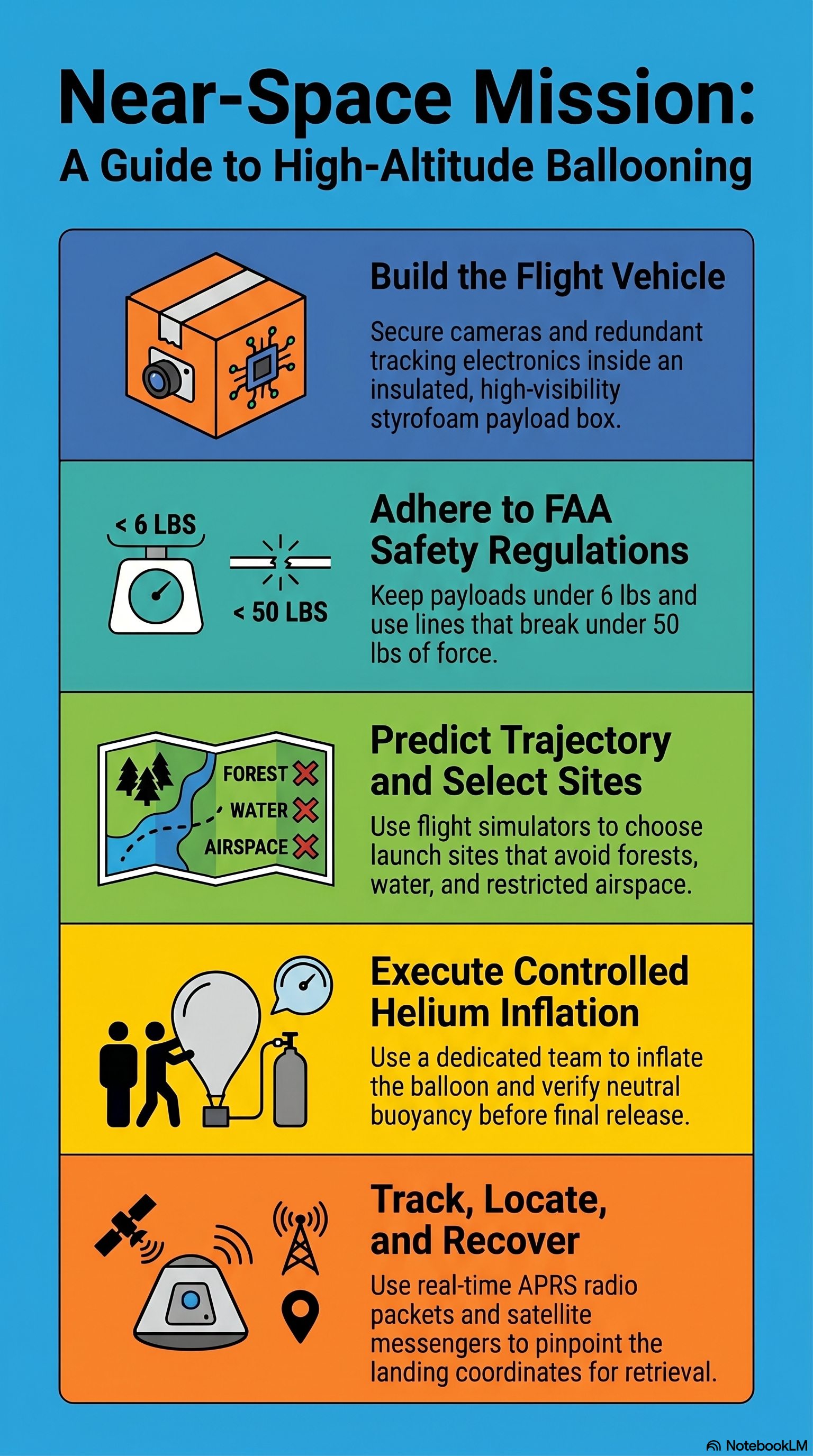
Near-Space Mission infographic showing the five stages of a high-altitude balloon flight

Near-Space Mission Guide

A one-page overview of the five stages of a high-altitude balloon mission — payload construction, FAA safety rules, trajectory prediction, controlled helium fill, and APRS-based recovery.

Download PNG
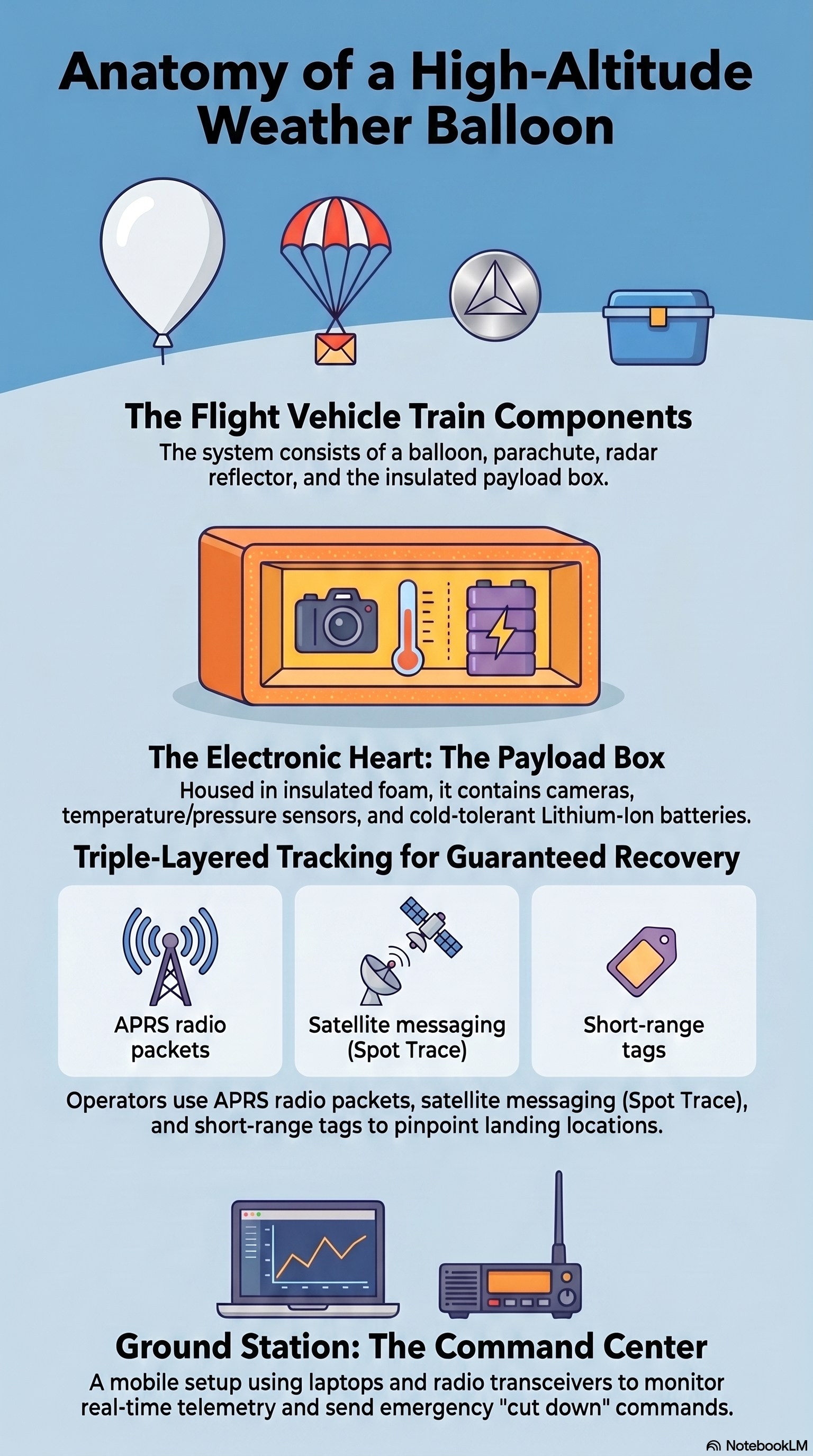
Anatomy of a High-Altitude Weather Balloon infographic showing the flight vehicle train, payload box, tracking systems, and ground station

Anatomy of a Weather Balloon

A breakdown of every part of the flight vehicle — balloon, parachute, radar reflector, the insulated payload box, triple-layered tracking systems, and the ground-station command center.

Download PNG

Built by a community.

P
Phillip Mabry
Project Lead · Technical Lead
J
Joel
Engineer · Parent Coach
C
Chris
Techie · Parent Coach
D
David
Teacher · Coach
M
Mr. Corn
Logistics · Coach

15+ Student Engineers

Ages 7–17. The builders, programmers, and future aerospace engineers of Gateway Christian School.

Join the Gateway Ascent family.

Help us reach
the edge of space.

Gateway Ascent runs on community support. Every donation goes directly to hardware, helium, and launch costs. We believe pursuing knowledge and excellence honors God — and we'd love to have your help.

$25
Buys a sensor module for the payload
$100
Covers a balloon + helium fill
$250
Funds a full mission milestone
Any
Every dollar gets us closer to the photo
Contact Us to Donate

Want to volunteer a skill? Reach out: phillip.mabry@gmail.com